


Abatable – a leading provider of comprehensive carbon market solutions – has identified ASEAN (the Association of Southeast Asian Nations) as one of the world’s largest and most dynamic economic blocs, with a combined GDP of over USD 3.4 trillion.
This region has developed comprehensive emission reduction plans under the Paris Agreement on Climate Change. However, ASEAN member countries have yet to decouple their economic growth from emission output, indicating significant potential for carbon pricing mechanisms to drive further decarbonization.
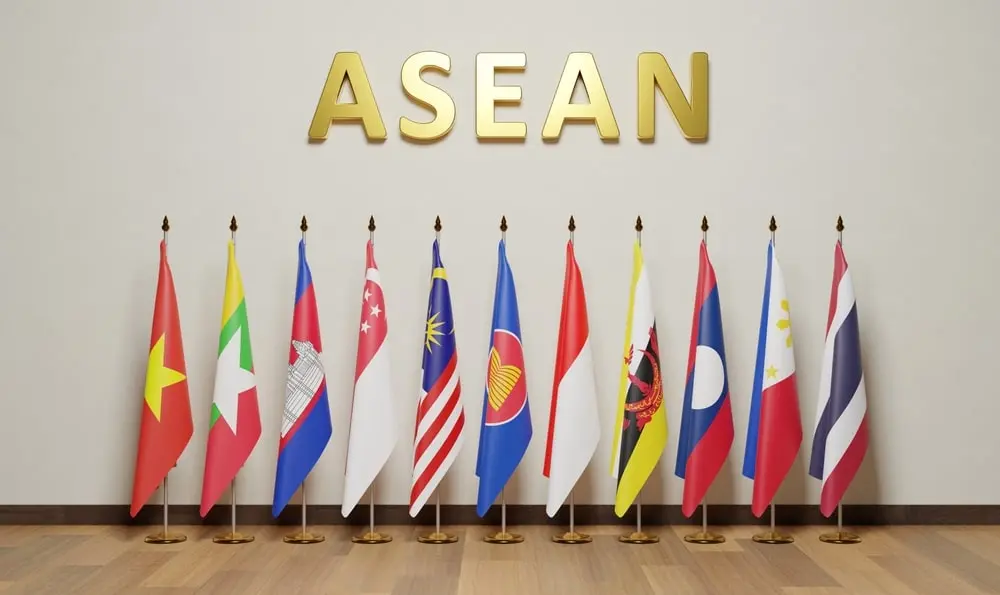
ASEAN comprises 10 member states (listed alphabetically): Brunei Darussalam, Cambodia, Indonesia, Laos, Malaysia, Myanmar, the Philippines, Singapore, Thailand, and Vietnam. Image credit: Carboncredits.
According to Carboncredits, ASEAN’s emerging carbon markets present a unique opportunity to address climate change while driving economic development. The region’s rich natural resources and strategic location promise enormous potential to lead global decarbonization efforts.
A recent report titled “Opportunities for Carbon Markets in ASEAN” by Abatable, released in Jakarta (Indonesia’s capital) in early December 2024, highlights how ASEAN’s carbon markets could generate cumulative revenues of USD 3 trillion by 2050.
This figure stems from reducing or removing emissions equivalent to 1.1 gigatons of CO2 annually, presenting a significant opportunity for the region. Such growth could create 13.7 million green jobs in ASEAN, underscoring the potential for economic and environmental transformation.
A Trillion-Dollar Market Potential by 2050
The trillion-dollar market includes revenue estimates for each of three categories of carbon projects (see chart):
- USD 27 billion from REDD+ (Reducing Emissions from Deforestation and Forest Degradation),
- USD 96 billion from Blue Carbon, and
- USD 144 billion from the Biochar Market.
Annual revenue potential for ASEAN’s carbon market by project type is forecast for 2030 and 2050. Source: Chart from “Opportunities for Carbon Markets in ASEAN” by Abatable.
With this “gold mine” in its grasp, what must ASEAN do to establish itself as a global carbon market leader?
Carbon Emissions Reduction in ASEAN: Turning Carbon Markets into Gold
Carbon markets work by assigning monetary value to carbon emissions, incentivizing industries to reduce greenhouse gas emissions. These markets are divided into two types:
- Compliance Markets: Mandated by governments, including mechanisms like carbon taxes and Emission Trading Systems (ETS).
- Voluntary Carbon Markets (VCM): Businesses voluntarily offset emissions by purchasing carbon credits from certified projects.
In ASEAN, carbon markets provide dual benefits: environmental gains through emission reductions and economic gains through market-driven investments.
Despite its combined GDP of USD 3.4 trillion, ASEAN remains heavily reliant on fossil fuels and suffers from deforestation, contributing significantly to emissions. The region accounted for approximately 6% of global emissions in 2023.
Key contributors to carbon pollution include:
- Energy sector: 50% of emissions, driven by coal dependency.
- Land use and forestry: 30%, due to deforestation and agricultural expansion.
- Agriculture: Produces 450 million tons of CO2 equivalent annually.
Despite these challenges, ASEAN’s tropical forests, mangroves, and agricultural landscapes offer untapped potential for carbon sequestration and sustainable practices.
The region has made strides in carbon credit generation, producing 233 million tons of credits from 2009 to 2024—roughly 7% of global issuances. Indonesia and Cambodia lead the way, primarily through forestry projects like REDD+. Thailand and Vietnam are also advancing renewable energy and efficiency projects.
These are promising signals for transforming ASEAN’s carbon market into “gold,” potentially generating USD 3 trillion in cumulative revenue by 2050, as outlined in Abatable’s report.
The “3-6 Strategy” to Unlock ASEAN’s Global Carbon Market Leadership
According to Carboncredits, ASEAN can achieve USD 3 trillion in cumulative revenue by 2050 and establish global carbon market leadership through the following strategy:
1. Three-Step Strategy for Revenue Generation:
- Nature-Based Solutions: Implement reforestation, afforestation, and mangrove restoration to capture carbon while conserving biodiversity.
- Energy Transition: Phase out coal-fired power plants.
- Innovative Investments: Focus on biochar and blue carbon projects to promote sustainable agriculture and marine ecosystems.
These initiatives could also yield socioeconomic benefits, including millions of green jobs by 2050.
However, ASEAN must overcome significant challenges to fully unlock its potential. Regulatory uncertainty—characterized by inconsistent policies and unclear frameworks—hinders investment. Market fragmentation limits cross-border carbon trading opportunities. Concerns over integrity, such as greenwashing and credit quality, further undermine market credibility, highlighting the need for robust systems and transparency.
2. Six Steps to Overcome Challenges and Lead the Global Carbon Market:
- Establish Clear Regulations: Transparent, standardized frameworks are essential to attract investment and expand carbon markets. Governments should define project approval processes, fee structures, and benefit-sharing rules.
- Build Institutional Capacity: Dedicated carbon market offices, regional training programs, and collaborative platforms can equip ASEAN nations with the expertise needed to manage carbon projects effectively.
- Align with International Standards: Harmonize methodologies with global best practices to enhance carbon credit credibility. Develop local standards while ensuring international recognition to expand market access.
- Develop Domestic Compliance Markets: Implementing carbon taxes and ETS can stimulate domestic demand for carbon credits, encouraging industries to adopt greener practices.
- Foster Regional Cooperation: Leverage Article 6 of the Paris Agreement to promote intra-ASEAN carbon trading. A unified framework can facilitate partnerships and attract global buyers.
- Raise Public Awareness: Regional campaigns and recognition programs can encourage businesses to participate in voluntary markets and drive demand for high-quality carbon credits.
By adopting these strategies, ASEAN can position itself as a hub for carbon market innovation. Its abundant natural resources and commitment to sustainable development make it well-equipped to lead global decarbonization efforts.
The “Opportunities for Carbon Markets in ASEAN” report by Abatable was developed in partnership with the ASEAN Carbon Market Alliance and the international consultancy Equatorise.
References: Abatable, Carboncredits, ASEAN
By Trang Ly – CafeBiz



 as one of the world's largest and most dynamic economic blocs, with a combined GDP of over USD 3.4 trillion)